
Compliance Readiness
Assess current practices, identify gaps and establish a proportionate improvement roadmap under applicable Nigerian data-protection requirements.
Data Protection
DTL helps organisations strengthen the governance, confidentiality and practical safeguards surrounding valuable and sensitive data.
Responsible practice
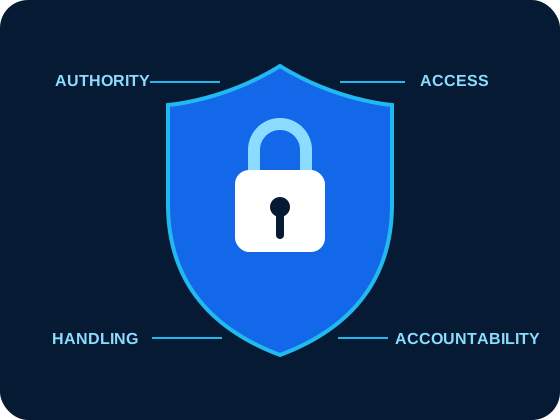
Confidence depends on more than technology. Organisations need clarity about who may access personal data, why it is processed, how it moves and who remains accountable.
DTL supports practical privacy and protection arrangements aligned with the Nigeria Data Protection Act 2023, applicable NDPC directives, business purpose, operational reality and the sensitivity of the information involved.
Protection capabilities
Support is proportionate to the organisation, the personal data, the processing risk and the applicable regulatory requirements.
Assess current practices, identify gaps and establish a proportionate improvement roadmap under applicable Nigerian data-protection requirements.
Define accountability, responsibilities, policies, oversight arrangements and practical support for the Data Protection Officer function.
Document personal-data categories, purposes, lawful bases, information flows, processors, retention needs and records of processing.
Improve privacy notices, consent practices and procedures for receiving, verifying and responding to data-subject requests.
Support privacy-by-design reviews and data protection impact assessments for higher-risk processing, systems and change initiatives.
Review processor arrangements, confidentiality controls, vendor due diligence and safeguards for domestic or cross-border data transfers.
Strengthen access, storage, sharing, retention, deletion and secure-disposal practices according to risk and business need.
Develop incident escalation, assessment, evidence preservation, notification and remediation procedures before an event occurs.
Build role-based understanding of privacy responsibilities, secure handling and accountable day-to-day behaviour.
Protection lifecycle
Who is permitted to collect, access or direct the use of the data?
Why is the information required, and what agreed outcome should it support?
How will access, transfer, storage and confidentiality be controlled?
Who verifies compliance, responds to issues and records decisions?
Potential outcomes
Defined roles and decision rights surrounding sensitive information.
More disciplined handling, access and exchange arrangements.
Visible commitment to privacy, governance and responsible stewardship.
Begin a protected conversation
Tell us the protection concern at a high level. Please do not attach confidential data at this stage.
Contact DTL